Thinks like an agent. Runs like code.
Automations that never break.
Set it up once, in plain English. It runs on its own from then on.
- From a chat to a running automation
- About a minute
- Typical cost of a run
- Less than a cent
- A break gets fixed, and stays fixed
- Once
Every morning, find sales leads in my inbox and add them to a sheet.
Done. Every weekday at 8:00 it checks your inbox and adds new leads to Sales leads.
Morning lead finder
Running- Next run
- Tomorrow, 8:00
- Breaks
- 0
Down 70% since week one
Run7 runs on ServeLLM and is built by Techanzy, a member of the NVIDIA Inception program.
About the NVIDIA Inception programThe shift
AI is good at writing code. So why keep it in the loop on every run?
Most tools decide what to do on every run, so they are slower, they cost more, and the result can drift. Run7 decides once, writes the job as tested code, and the code does the work. If something upstream breaks, Run7 fixes the code and checks the fix against every run that worked before.
Let AI write the code. Then let the code do the work.
How it works
Come in, set it up, and it runs.
1Set it up
Describe what you want in plain English, by chat. No flowcharts, no code.
2It builds
Run7 writes your automation as real, tested code. This takes about a minute.
3It runs
On schedule, fast and cheap, the same way every time.
4It never breaks
If something changes, Run7 fixes itself once, for good.
Why Run7
Easy to set up. Stable to run.
Easy
Set it up by chat, in plain English. Running in about a minute. No flowcharts, no code.
Stable
Same input, same output. Every run works the same way as the one before it.
Efficient
A run is plain code, so it is quick and it costs very little. It gets cheaper the more it runs.
It fixes itself
If something upstream changes, Run7 fixes it once, for good. You approve the fix with one click.
You can see every run
Each run keeps a plain record: what went in, what came out, how long it took and what it cost.
Run it from anywhere
On a schedule, from a webhook, or with one API call from whatever you already use.
One real run
Same inbox, same task. One rethinks everything. One just runs.
“Digest the last 24 hours of my Gmail inbox.”
- An agent tool, with AI in the loop on every run64.8 s, analysed 1 of about 201 emails, partial digest
- The same task as a Run7 automation18.4 s, complete digest, 10 of 10 emails, 0 errors
3.5×
Faster end to end (18.4 s vs 64.8 s)
72%
Fewer tokens on this run
18 → 0
Runtime errors
Internal A/B benchmark, July 2026: one Gmail digest automation against an agent baseline on the same inbox. Across all four runs: 62% fewer tokens and 1 runtime error against 59. A small sample, on our own test harness.
When something breaks
Google changed the API. Run7 stopped, got fixed once, and never failed that way again.
It failed loudly
Google changed the shape of a Gmail response. The automation checks what every connection returns, so it stopped with a clear error instead of sending a half-finished digest.
The fix was checked
Run7 proposed a fix to the code. Before shipping, it had to pass every run that had worked before.
Approved, and locked in
The fix was approved with one click. That failure is now a permanent test, and it has not come back.
For developers
Thinks like an agent. Runs like code.
Every automation is real code, with version history, a full run record and its own endpoint and webhook. Open it, read it, change it, or call it from your own product.
$run7 init lead-finder
Created lead-finder/automation.py
$run7 dev
Running locally. 12 of 12 tests passed.
$run7 push
Live. Next run weekdays at 8:00.
Who it’s for
One platform, three ways to use it.
Teams and individuals
Describe the work once, hand it off and trust it. Self-serve automation with no babysitting.
Developers
Build products on top of Run7. Every automation is an API, so it can be your automation backend.
Enterprise
Runs on your own infrastructure, with SSO, audit logs, private connectors and a named contact.
Already used for lead triage, document and transaction classification and inbox digests, with two enterprise clients piloting it in their own production environments.
Questions
Questions people ask.
What is an automation?
A job you want done without you. Run7 writes it as real code, runs it on schedule, and keeps a record of every run. You set it up by chat, in plain English.
Do I need to know how to code?
No. You describe what you want and Run7 builds it. The code is there to read and change if you want to.
How is this different from Zapier or n8n?
Those tools work out what to do on every run, so they are slower, they cost more, and the result can drift. Run7 works out the job once, writes code and runs that code, so the same input gives the same output.
What happens when something breaks?
The automation stops and tells you what happened in plain words. Run7 then fixes the code and checks the fix against the failure and every run that worked before. You approve the fix with one click.
Does it still use AI when it runs?
Only where a step really needs it, like reading a message and pulling out a name. Most runs call no model at all.
Is my data used to train models?
No. Inputs and outputs are kept only to test your own automations, and the data stays yours.
Set up your first automation.
Describe it by chat, in plain English. It will be running in about a minute.

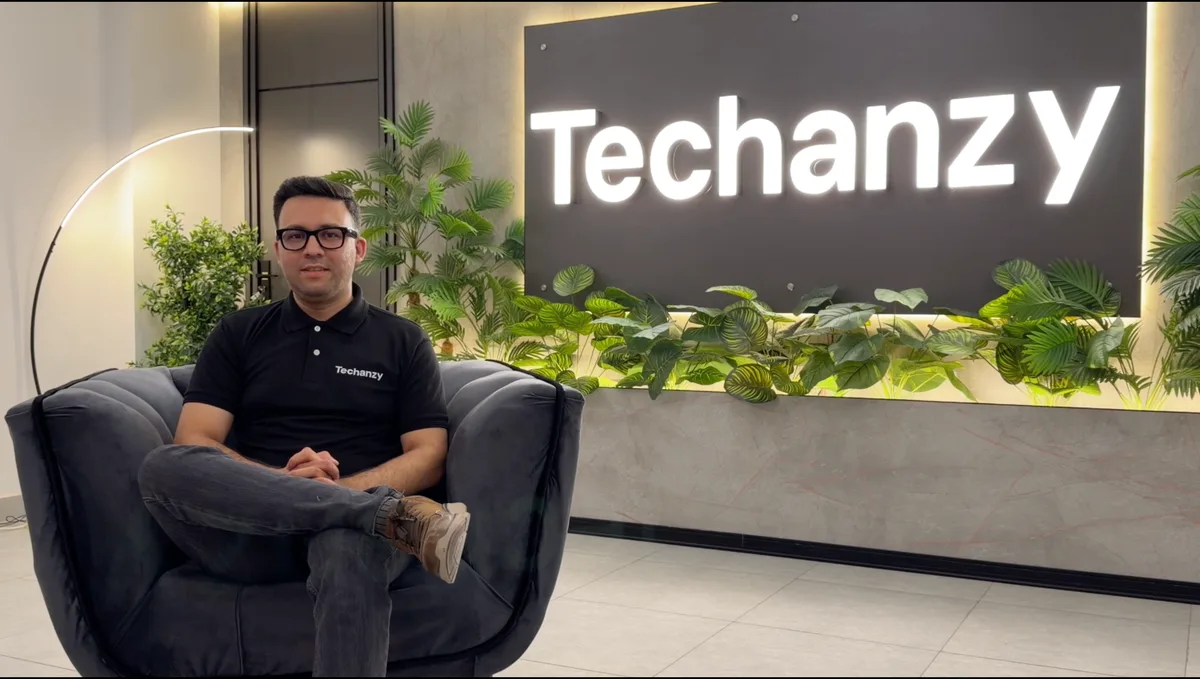
Run7 is built by Techanzy. Your AI-native technology partner.
We design, build and support Run7, with 50+ engineers across London, Lahore and Dubai and projects delivered in 15+ countries.

ISO/IEC 27001
Information security
Audited controls for access, encryption and incident response.

ISO/IEC 42001
AI management system
Governance, human oversight and evaluation of the AI we build.

ISO 9001
Quality management
Certified process for scoping, delivery and client feedback.